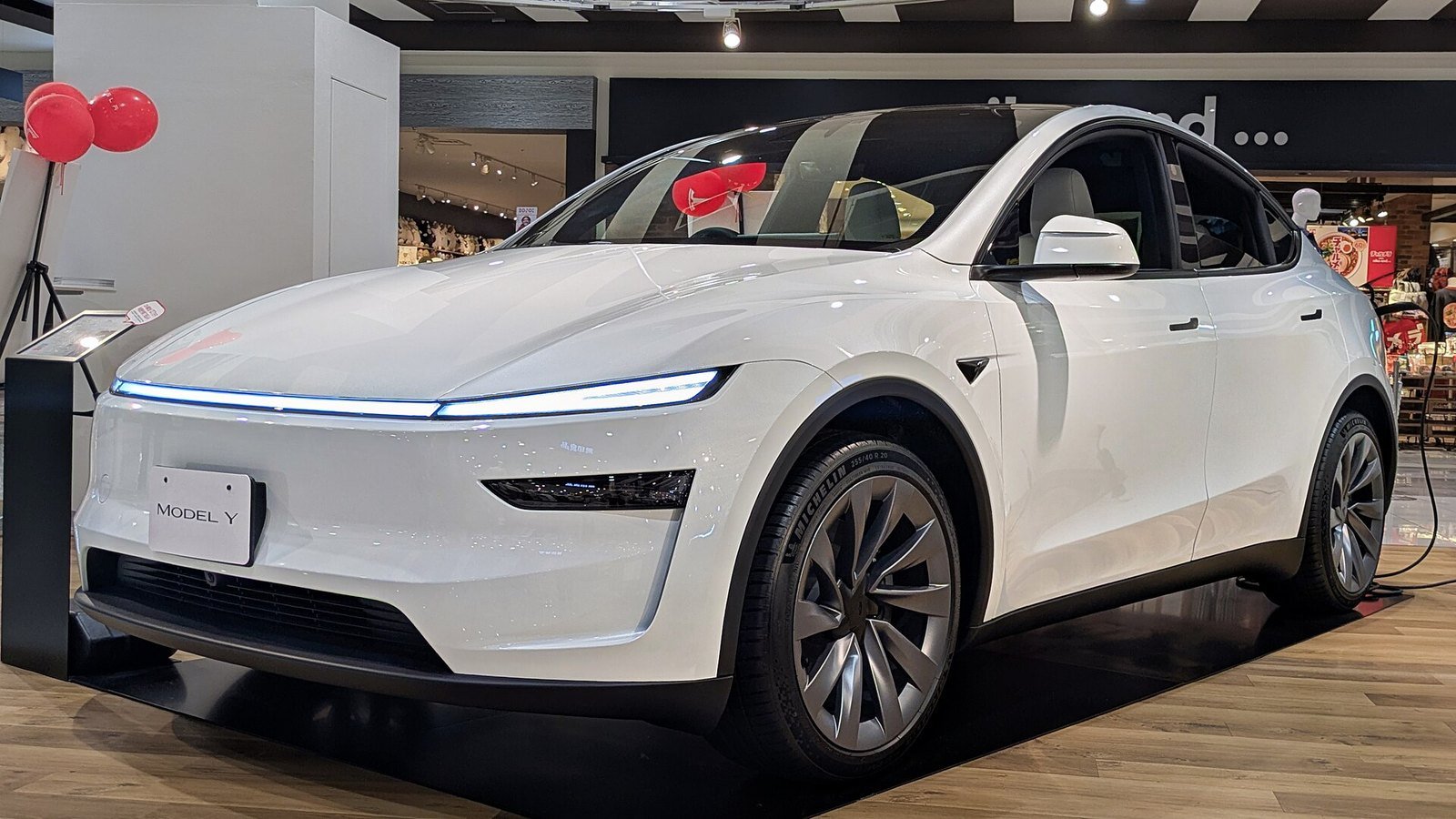
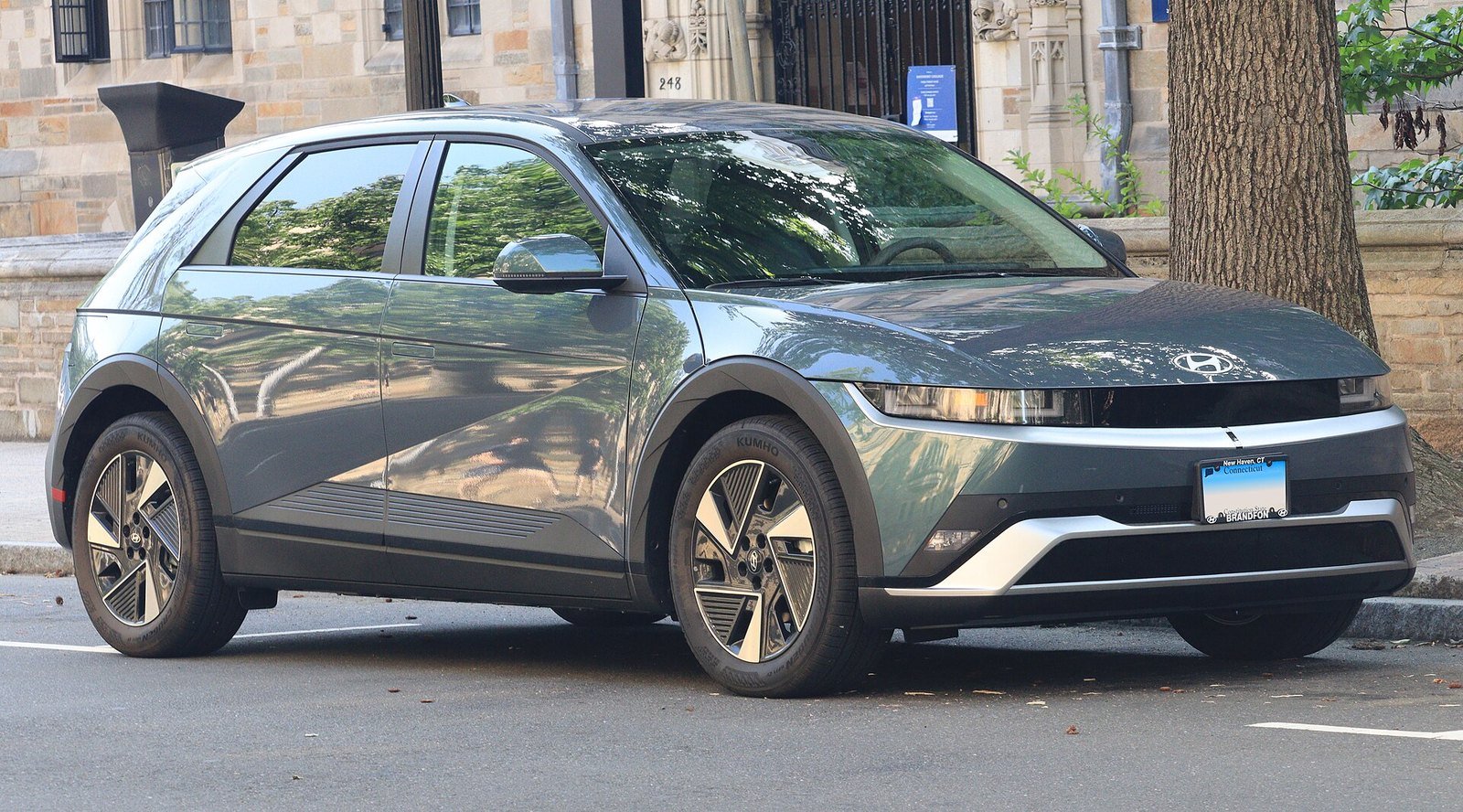
I spent yesterday afternoon with two price sheets open on the same screen: Tesla’s design studio and Hyundai’s 2026 IONIQ 5 pricing page. Both cars are five-seat electric crossovers, both are built in the US, and both will be sitting in the same shopping list for anyone who wants around 300 miles of range without paying German money.
They get there in completely different ways. And the moment you stop comparing the headline “from $39,990” against “from $35,000” and start comparing the car you’d actually drive home, the numbers move in ways that surprised me.
Everything below is from the makers’ own pages, checked on November 24, 2026, plus the real-world range and charging figures from Edmunds’ instrumented tests. I’ve marked anything I calculated myself.
Start with the sheet, not the slogan
Tesla sells five Model Ys in the US right now, and they are not trim levels of the same car so much as two different cars wearing one badge. The base car is the value version: textile seats, 18-inch wheels, the shorter-range pack. From the Premium up you get the longer pack, the nicer cabin and the option list that matches the photos.
| 2026 Model Y (US) | Price | EPA range | Energy use |
|---|---|---|---|
| RWD | $39,990 | 321 mi | 24 kWh/100 mi |
| AWD | $41,990 | 294 mi | 26 kWh/100 mi |
| Premium RWD | $45,990 | 357 mi | 25 kWh/100 mi |
| Premium AWD | $49,990 | 327 mi | 27 kWh/100 mi |
| Performance AWD | $57,990 | 306 mi | 32 kWh/100 mi |
| Model Y L Premium AWD | $61,990 | Long wheelbase, six seats | — |
| Prices from Tesla’s US design studio, cash tab, Nov 24 2026. EPA figures from fueleconomy.gov for the corresponding 2026 records. Both exclude Tesla’s destination and order fees. | |||
One thing worth knowing before you fall in love with the $39,990 number: Tesla’s own studio shows 348 miles for that car with its 18-inch wheels, while the EPA record for the same car says 321. Tesla is quoting its own estimate. When a number on the configurator is bigger than the government’s, I trust the government’s.
Hyundai’s ladder is longer and cheaper at every rung:
| 2026 IONIQ 5 (US) | Price | Battery | EPA range |
|---|---|---|---|
| SE Standard Range RWD | $35,000 | 63 kWh | 245 mi |
| SE RWD | $37,500 | 84 kWh | 318 mi |
| SEL RWD | $39,800 | 84 kWh | 318 mi |
| Limited RWD | $45,075 | 84 kWh | 318 mi |
| SE AWD | $41,000 | 84 kWh | 290 mi |
| SEL AWD | $43,300 | 84 kWh | 290 mi |
| XRT AWD | $46,275 | 84 kWh | 259 mi |
| Limited AWD | $48,975 | 84 kWh | 269 mi |
| Hyundai Motor America 2026 IONIQ 5 price sheet (Oct 1 2025), freight $1,600 extra. | |||
Put the two AWD cars people actually cross-shop side by side and the gap is $6,690: Model Y Premium AWD at $49,990 against IONIQ 5 SEL AWD at $43,300. Spend a little more on the Hyundai and its Limited AWD at $48,975 lands within $1,015 of the Tesla, with a vision roof, ventilated seats, a head-up display and Bose audio on the window sticker.
The range story is not what the stickers say
On paper Tesla wins this comfortably. 357 miles versus 318. But that 357 belongs to the rear-drive Premium car, and it’s the one number in this comparison that doesn’t survive contact with a test track.
Edmunds drove both Model Y drivetrains to empty on their standard route. The AWD car did 327 miles, exactly matching its EPA rating. The RWD car did 327 too — forty miles short of its window sticker. So the car that costs $4,000 less and promises 30 miles more delivered the same distance in the test. If you were buying the rear-drive Premium purely for range, that argument just evaporated.
Hyundai goes the other way. The IONIQ 5 Limited AWD is rated at 269 miles and Edmunds measured 282. The XRT is rated 259 and measured 290. Hyundai’s numbers are pessimistic in a way that’s almost old-fashioned, and I’d rather have that than the opposite.
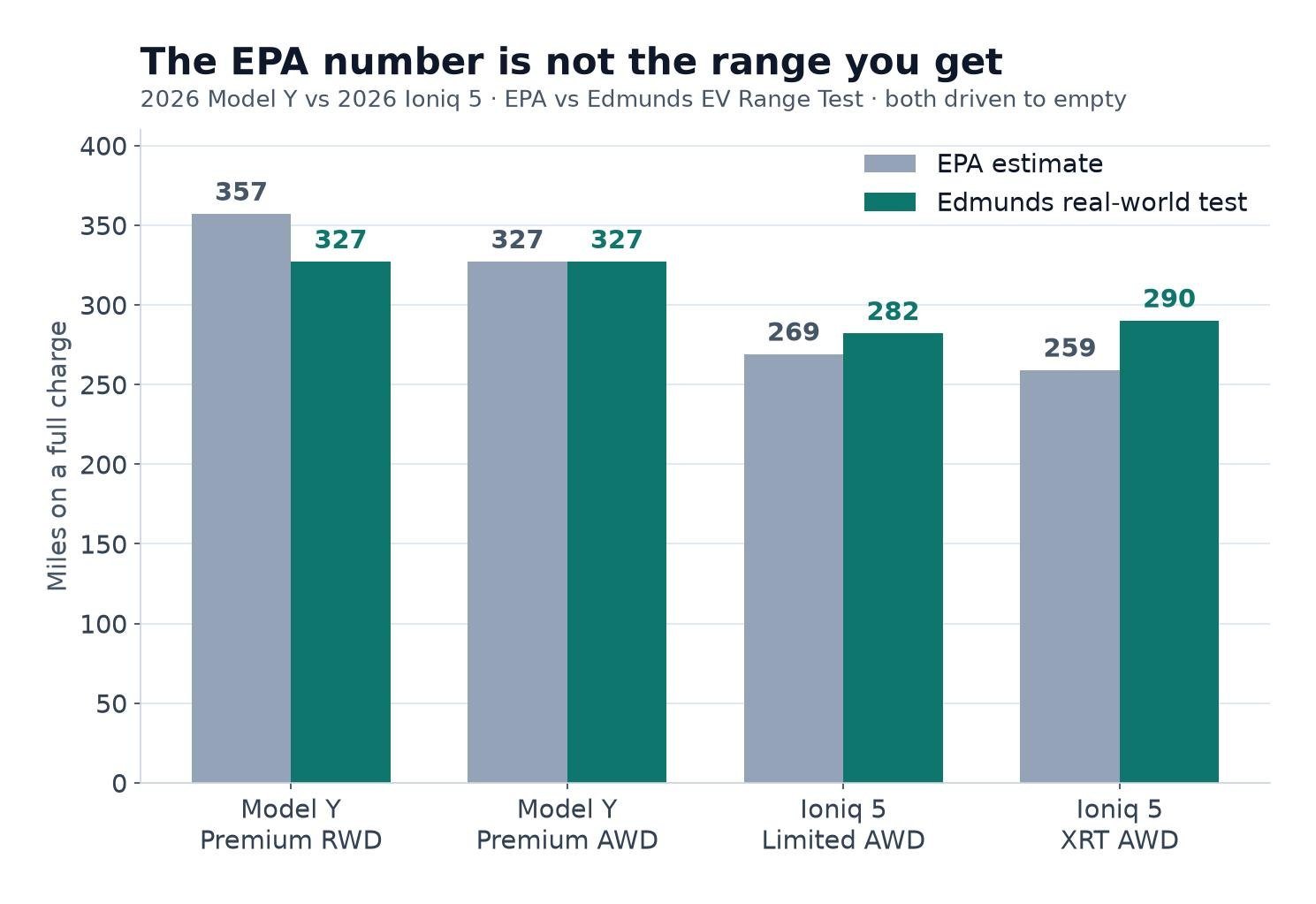
So when you’re comparing the two AWD cars most people buy, the real-world difference is 45 miles in Tesla’s favour — roughly one extra highway stop every three or four long trips. That’s real, but it’s not the chasm the spec sheet implies.
Charging: 800 volts, with an asterisk the size of a Supercharger
This is the part where the IONIQ 5 looks unbeatable on paper and then gets complicated in a parking lot.
Hyundai’s numbers, straight off the 2026 spec sheet: the 84 kWh pack runs at 697 volts, and on a 350 kW CCS charger it goes 10 to 80 percent in 20 minutes. On a 50 kW charger the same car takes 1 hour 21 minutes. That’s not a mistake — a big pack on a weak charger is a big pack on a weak charger.
Then there’s the bit Hyundai puts in the fine print. The 2026 IONIQ 5 switched to a native NACS port so it can plug straight into a Tesla Supercharger without an adapter. Great, except those V3/V4 stalls deliver around 400 volts, and the car’s 800-volt pack has to step that up. Result: about 30 minutes for 10 to 80 percent, versus 20 on a 350 kW CCS unit with the included adapter. You gained the plug and lost ten minutes.
Tesla has no such split personality. Its pack is built for its own network, and Edmunds measured the RWD car adding 100 miles of range in just under 14 minutes, a rate of 434 miles per hour. The IONIQ 5 did the same 100 miles in 8 minutes on a 350 kW charger.
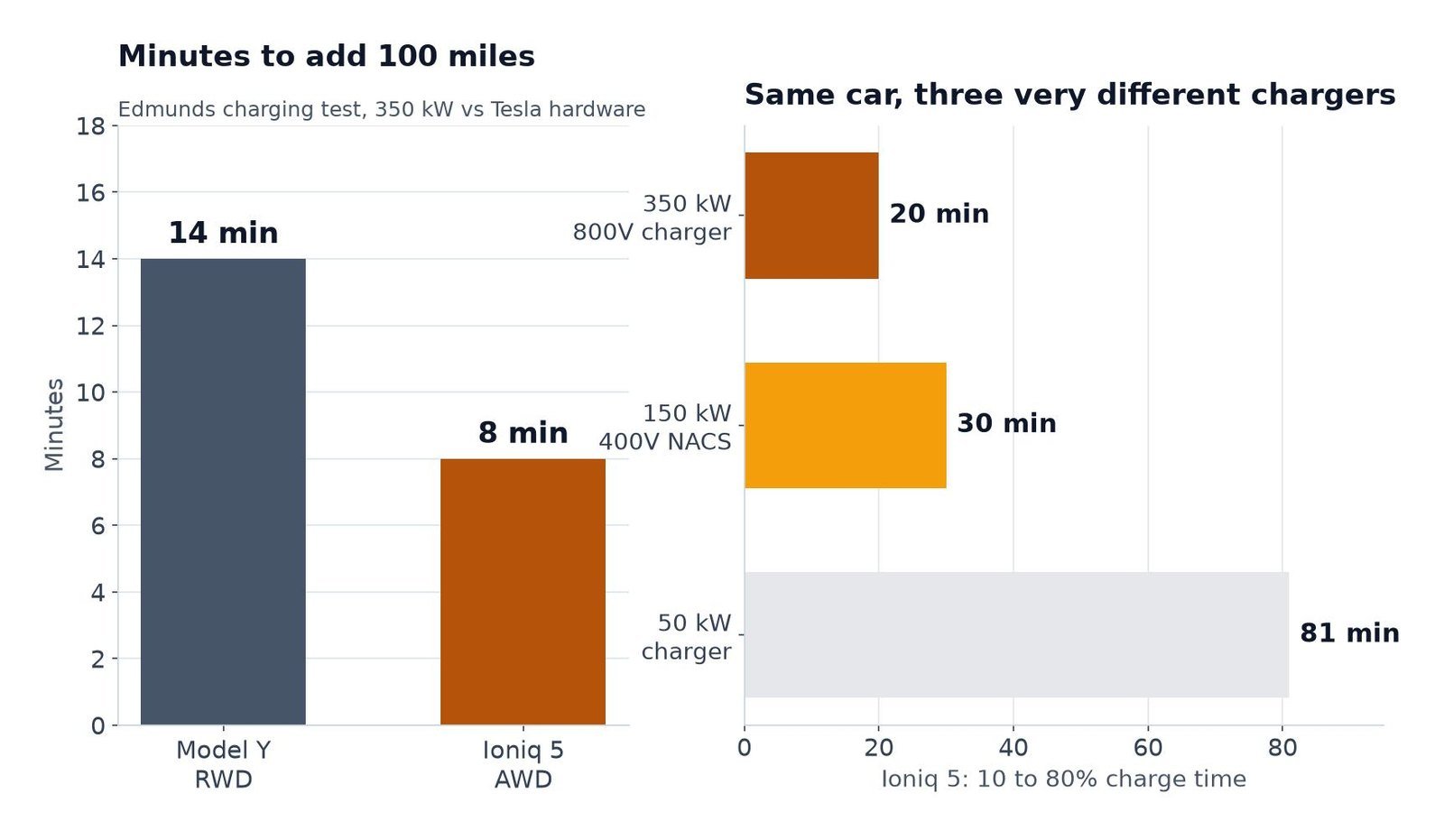
What I take from this: if your fast charging happens on Electrify America, IONIQ 5 is the quicker car by a wide margin. If it happens on Superchargers — which, realistically, is where most people end up because the network is bigger and works more often — the two cars are much closer than the 800-volt marketing suggests.
| Charging, official figures | Model Y Premium AWD | IONIQ 5 SEL / Limited AWD |
|---|---|---|
| Pack architecture | 400-volt class | 697 V (marketed as 800V) |
| 10–80% on a 350 kW CCS charger | Not published by Tesla | 20 min |
| 10–80% on a 150 kW NACS stall | Native NACS | 30 min |
| 10–80% on a 50 kW charger | — | 81 min |
| Home AC, 10–100% | 11.5 kW onboard (48 A) | 7 h 20 min on 240 V |
| Measured: minutes for 100 miles | 14 min (RWD, Edmunds) | 8 min (350 kW, Edmunds) |
Now the part that actually leaves your bank account
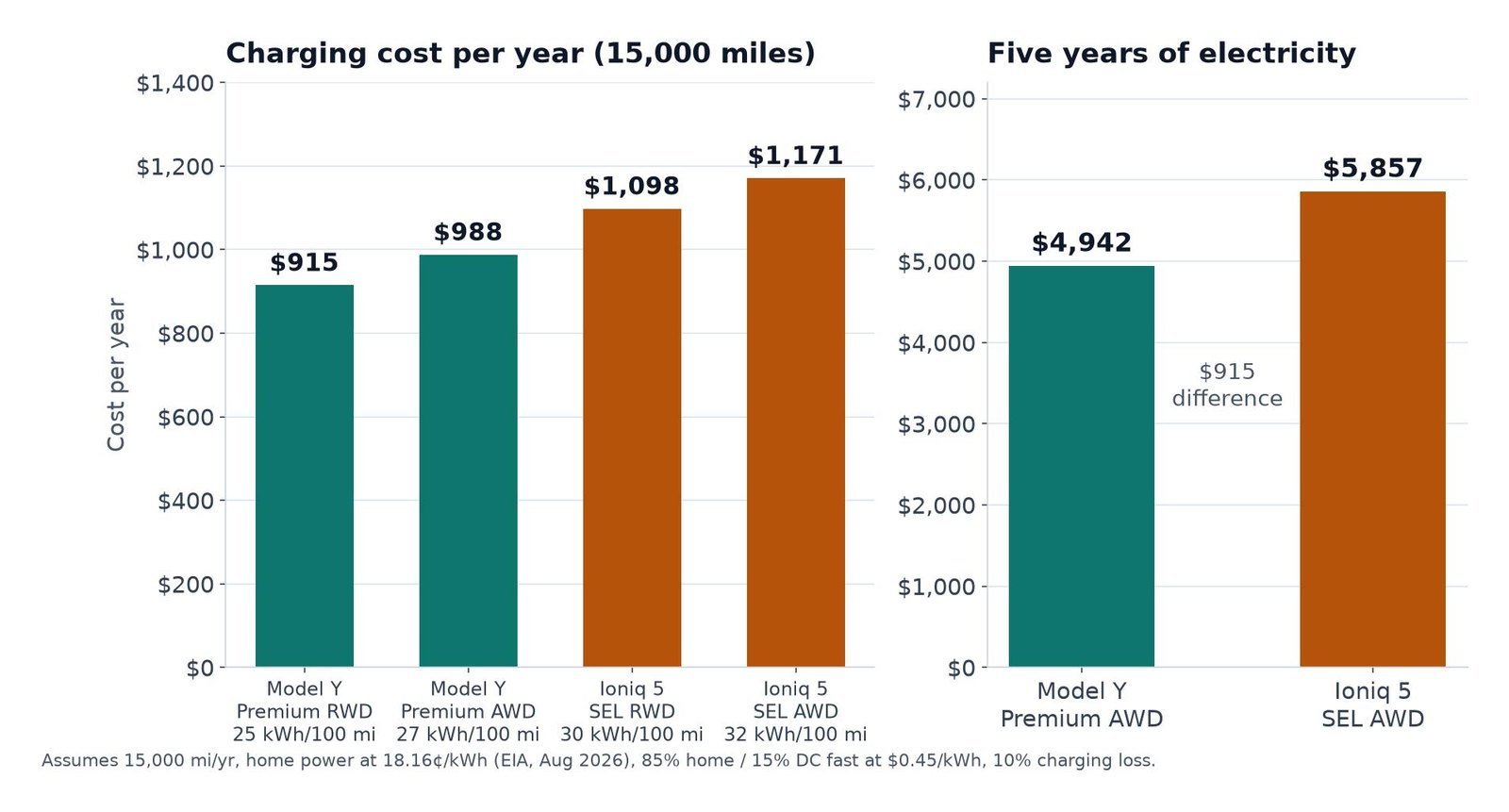
Sticker price gets all the attention, but the running cost is where the two cars quietly separate. The Model Y is the more efficient machine — 27 kWh per 100 miles in AWD form against 32 for the IONIQ 5 SEL AWD — and that gap compounds every single month.
Here’s my simulation, and I’ll be explicit about every assumption because this is the kind of table people quote out of context. 15,000 miles a year. Home electricity at 18.16 cents/kWh, which is the US residential average for August 2026 from the EIA. 85 percent of charging at home, 15 percent on DC fast chargers at $0.45/kWh. A 10 percent charging loss on top of the EPA consumption figure.
| 15,000 miles a year | Energy drawn | Per year | Per 100 miles | 5 years |
|---|---|---|---|---|
| Model Y Premium RWD | 4,125 kWh | $915 | $6.10 | $4,575 |
| Model Y Premium AWD | 4,455 kWh | $988 | $6.59 | $4,942 |
| IONIQ 5 SEL RWD | 4,950 kWh | $1,098 | $7.32 | $5,491 |
| IONIQ 5 SEL AWD | 5,280 kWh | $1,171 | $7.81 | $5,857 |
| IONIQ 5 Limited AWD | 5,610 kWh | $1,245 | $8.30 | $6,224 |
| A 30 mpg crossover on regular at $3.805/gal (EIA, week of Nov 16 2026) | $12.68 | $9,510 | ||
Twelve hundred dollars a year against a 30 mpg petrol crossover is the honest headline. Both of these cars are cheap to run; the Tesla is about 16 percent cheaper again.
The five-year picture, price included
Add the purchase price back in and the ordering flips. I’ve used a flat $500 a year for tyres, filters and brake fluid — a service allowance, not a quote, since nobody can predict your tyre wear. No insurance, no depreciation, no incentives: those swing too much by state and by month to put in a table that people will read in six months.
| Five years, 75,000 miles | Purchase price | Electricity | Service allowance | Total |
|---|---|---|---|---|
| Model Y Premium AWD | $49,990 | $4,942 | $2,500 | $57,432 |
| IONIQ 5 SEL AWD | $43,300 | $5,857 | $2,500 | $51,657 |
| IONIQ 5 Limited AWD | $48,975 | $6,224 | $2,500 | $57,699 |
So the SEL AWD is $5,775 cheaper to own for five years than the Model Y Premium AWD, and the loaded Limited AWD is within $267 of it. That’s before anyone argues about resale, which I won’t pretend to know.
What I’d actually do
If the charging happens mostly at home and you like driving: the IONIQ 5. The ride is better, the materials are nicer, you get real buttons for the climate, and Android Auto and CarPlay work. You’re giving up 45 miles of tested range and about $150 a year in electricity, and saving five and a half grand up front.
If you do a lot of long-distance driving: the Model Y. Not because of the 357-mile sticker, but because of the Supercharger network, which is still the difference between a road trip and an afternoon of charger roulette. The 800-volt IONIQ 5 would be quicker if every charger were a 350 kW CCS unit. They aren’t.
If you want the smaller car and a lower entry price: look closely at what $39,990 buys you. Textile seats, 18-inch wheels, 321 miles of EPA range. It’s a good car, but it isn’t the car in the photos with the white interior.
The one thing I’d tell a friend standing in either showroom: the two cars are closer than the price gap says and further apart than the range gap says. Drive them both on the same day.
Questions people keep asking
Is the 2026 Model Y the Juniper?
Yes, in the US the refreshed car is the 2026 model year, including early cars delivered in 2025. The tenth digit of the VIN is T for 2026 and S for 2025.
Does the IONIQ 5 really charge in 18 minutes?
Hyundai’s 2026 figures say 20 minutes for 10–80 percent on an 800V/350 kW CCS charger with the included adapter. Some earlier Hyundai material and the IONIQ 5 N quote 18 minutes. Use 20 and you won’t be disappointed.
Can I use a Tesla Supercharger in the IONIQ 5?
Yes. The 2026 car has a native NACS port and Hyundai quotes about 30 minutes for 10–80 percent on a 150 kW V3/V4 stall.
Which one is cheaper to insure?
I don’t have a verified comparison, and quotes vary enormously by ZIP code and driver. Get both quoted before you decide.
Do the prices include destination?
No. Hyundai’s freight is $1,600. Tesla adds destination and order fees at checkout, on top of the design-studio price.
Is FSD included?
No. Tesla’s configurator adds Full Self-Driving (Supervised) as a $99/month subscription after a one-month trial. Hyundai’s Highway Driving Assist 2 is standard on SEL and above.
Sources
Tesla US design studio (tesla.com/modely/design), cash prices checked Nov 24 2026 · fueleconomy.gov 2026 Tesla Model Y and 2026 Hyundai IONIQ 5 records (EPA range, kWh/100 mi) · hyundaiusa.com 2026 IONIQ 5 specifications (battery voltage, 84 kWh pack, charging times) · Hyundai Motor America 2026 IONIQ 5 pricing release, Oct 1 2025 (trim MSRPs, $1,600 freight) · Edmunds EV Range Test and EV Charging Test results for the 2026 Model Y and 2026 IONIQ 5 · U.S. EIA Electric Power Monthly, Table 5.6.A, August 2026 (18.16¢/kWh residential average) · U.S. EIA Gasoline and Diesel Fuel Update, week of Nov 16 2026 ($3.805/gal).
How this was checked. Every price and specification above came from the manufacturer’s own page or a government database on November 24, 2026. Range and charging figures credited to Edmunds are their instrumented test results, not ours. Cost tables are our arithmetic on those numbers, with the assumptions listed.
Prices move. Tesla has changed Model Y pricing several times in 2025 and 2026, and Hyundai’s incentives vary by region and month. Confirm the number on the configurator before you sign anything. We are not affiliated with Tesla or Hyundai and we don’t take referral payments from either.
Header photo: Aos.1905, CC BY 4.0, via Wikimedia Commons.